
National Economy’s Plumbing Blog
Plumbing Articles from New Orleans, LA
Do You Need Residential Backflow Prevention? A New Orleans Homeowner’s Guide

Key Takeaways
- Most simple homes do not need a backflow preventer, but if you have an in-ground sprinkler system, a pool, a well, or fire sprinklers, you almost certainly need residential backflow prevention.
- In New Orleans, the Sewerage and Water Board (SWBNO) actively surveys properties and mails a notice when it finds a cross-connection hazard like an irrigation line.
- The most common home cross-connection is the simplest: a garden hose left submerged in a pool, bucket, or fountain. An air gap fixes it for free.
- A backflow preventer for sprinkler system lines is usually a pressure vacuum breaker (PVB). High-hazard setups need a reduced pressure zone (RPZ) assembly.
- If SWBNO requires a device on your property, you must have it tested every year by a certified tester and the results filed within 10 days.
- Backflow preventer cost is modest next to the fine for ignoring a notice, which starts at $500 per device and climbs from there.
Residential backflow prevention is one of those things most homeowners never think about until a letter from the Sewerage and Water Board lands in the mailbox. So let us answer the question on your mind first: do I need a backflow preventer? If your house is just a house, with indoor plumbing and an outdoor faucet or two, probably not. But if you have an in-ground sprinkler system, a pool, a well, or fire sprinklers, then yes, you almost certainly need a residential backflow preventer, and in New Orleans the city may already know it before you do.
This guide walks through all of it in plain terms: what actually triggers the requirement, what backflow even is and why it matters at home, the types of devices, real backflow preventer cost ranges, and exactly what to do if you get a notice from the city. We have installed and tested residential backflow prevention assemblies on New Orleans homes since 1939, so we will keep it practical and specific to how things work here, not generic advice copied from a national page.
Do You Actually Need a Backflow Preventer?
The honest answer is that it depends entirely on what is connected to your water line. Residential backflow prevention is about one thing: keeping water that has touched something non-potable from getting pulled back into your clean supply, or the city’s. A plain home has very few ways for that to happen. Add a sprinkler system, a pool, or a well, and you create a path, which is exactly what the rules are written around.
So when homeowners ask do I need a backflow preventer, the sharper question is what do I actually have connected to my water. Answer that and the residential backflow preventer requirement answers itself, because residential backflow prevention is driven entirely by what is on the line.
Here are the setups that almost always require a residential backflow preventer in New Orleans. An in-ground irrigation or sprinkler system is the big one, because the heads sit in soil, fertilizer, and standing water, and a pressure drop can siphon all of that backward. Pools and decorative fountains count too, especially if they are topped off by a hose left sitting in the water.
Wells, rainwater collection, and any secondary water source create a cross-connection by definition. Fire sprinkler systems and boilers round out the list. If none of those describe your home, you probably do not need residential backflow prevention hardware at all, just good habits at the garden hose. For everyone else, residential backflow prevention is not optional, and getting the right device in place is what this guide is about.
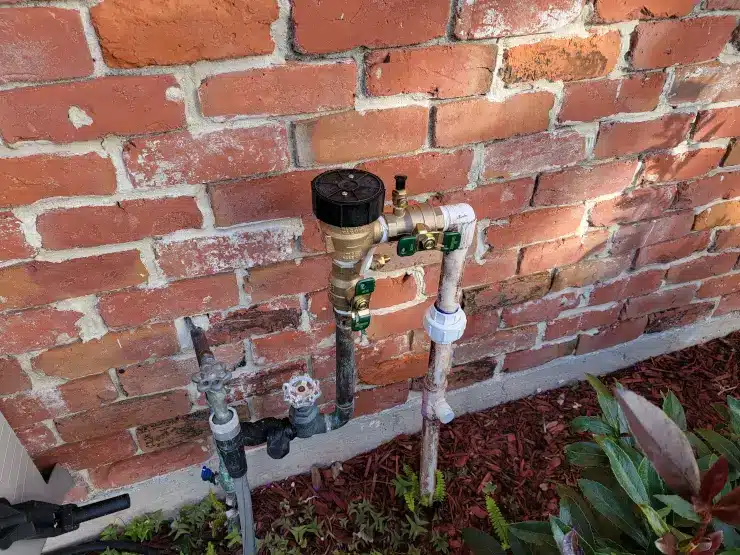
A pressure vacuum breaker guarding the irrigation line at a New Orleans home, the most common residential setup we install.
| What you have | Why it is a risk | Typical device |
|---|---|---|
| In-ground sprinkler system | Heads sit in soil, fertilizer, and pooled water | Pressure vacuum breaker (PVB) |
| Pool or fountain | Hose left submerged while topping off | Air gap, or PVB on a fill line |
| Private well or rainwater | Secondary source tied to home plumbing | RPZ assembly |
| Fire sprinkler system | Standing water in the lines for years | Double check or RPZ |
| Boiler or chemical feed | Treatment chemicals can reverse into supply | RPZ assembly (high hazard) |
| Just indoor plumbing and hose bibs | Low risk, mainly the garden hose itself | Hose bib vacuum breaker |
If you run a restaurant or other food business, the requirements are stricter and worth their own read, which we cover in our guide to backflow rules for restaurants. For everyone else, the list above is the short version of who needs residential backflow prevention and who does not.
The Backflow Preventer for Sprinkler System Owners
Because irrigation is the most common trigger by far, it earns its own section. A backflow preventer for sprinkler system lines is the device that stops water sitting in your irrigation pipes, full of soil, fertilizer, and whatever the heads are buried in, from reversing into your drinking water when pressure drops. In New Orleans nearly every in-ground system needs one, and most use a pressure vacuum breaker (PVB) mounted above grade where it can be tested. It is the single most common residential backflow preventer we install.
If a previous owner put your system in, there is a good chance a backflow preventer for sprinkler system protection is already there, near the point where the irrigation line leaves the house. The real questions are whether it still works and whether it has been tested. An old or cracked unit fails its certification, and an untested one leaves you out of compliance even when it is physically fine.
When we fit a backflow preventer for sprinkler system service, we size it to the system, set it at the correct height, and file that first certification so you start current. If you are still wondering do I need a backflow preventer for your sprinklers, in this city the answer is almost always yes, and a backflow preventer for sprinkler system protection is the device that gets you there.
What Backflow Is, and Why It Matters at Home
Backflow is simply water flowing the wrong way. Your plumbing is built for one direction, clean water in, used water out. When that reverses, contaminated water can get pulled into the pipes that feed your kitchen tap. It happens two ways. Backpressure is when something downstream, like a pump or boiler, pushes harder than the city line. Backsiphonage is the common one at home: a sudden drop in supply pressure creates a vacuum that sucks water backward. A water main break, heavy firefighting nearby, or a spike in neighborhood demand can all cause it.
Here is the part that surprises people. The number one cross-connection on a residential property is not some exotic piece of equipment. It is a garden hose left sitting in non-potable water: a pool, a bucket of soapy car-wash water, a pet bowl, an ornamental fountain. If the pressure drops while that hose is submerged, the dirty water gets pulled straight back into your line.
The fix costs nothing. Leave an air gap, meaning the hose end stays above the water surface by a couple of inches rather than dangling in it. That single habit eliminates the most common cross-connection most homes ever have, and it is the simplest piece of residential backflow prevention there is. No device, no test, no backflow preventer cost at all, just a small change in how you fill things.
The reason a sudden pressure drop is worth taking seriously is the same reason we tell people to pay attention to a sudden drop in water pressure in general. It is usually harmless, but it is also the exact condition that turns a cross-connection into a contamination event. That is what a backflow preventer is built for, and it is why residential backflow prevention exists as a rule rather than a suggestion.
The Types of Backflow Preventers for a Home
There is no single residential backflow preventer. There are several, and the right one depends on how risky the connection is. The standards behind all of them come from the USC Foundation that writes the national backflow standards, and Louisiana code follows that hierarchy: the higher the hazard, the more protective the device has to be. For a home you will run into a handful of them, and knowing the difference helps you understand what a plumber recommends for residential backflow prevention and why. It also helps you answer, for your own property, do I need a backflow preventer at the high-hazard level or just a simple one.
At the simplest end is the air gap, which is not a device at all but a physical space between a water outlet and anything it could be contaminated by. It is the cheapest and most reliable backflow prevention there is. Next is the hose bib vacuum breaker, a small cap that screws onto an outdoor spigot for a few dollars and stops backsiphonage through a garden hose. Neither one needs annual testing, and together they cover the everyday risks at a simple home that has no irrigation, pool, or well.
Stepping up, the atmospheric vacuum breaker (AVB) is a basic in-line device for simple irrigation zones, but it cannot sit under constant pressure. The pressure vacuum breaker (PVB) is the workhorse residential backflow preventer for irrigation, sits above ground, and can be tested, which is why most home sprinkler systems here use one. For the typical New Orleans home with sprinklers, the PVB is the residential backflow preventer the code calls for.
For tougher cases there are two more. A double check valve assembly (DCVA) uses two independent check valves for moderate hazards. The reduced pressure zone (RPZ) assembly is the most protective residential backflow preventer, required for high-hazard connections like wells, boilers, or chemical feeds, and it is the one with the small relief valve that occasionally drips a little water, which is normal and by design rather than a leak.
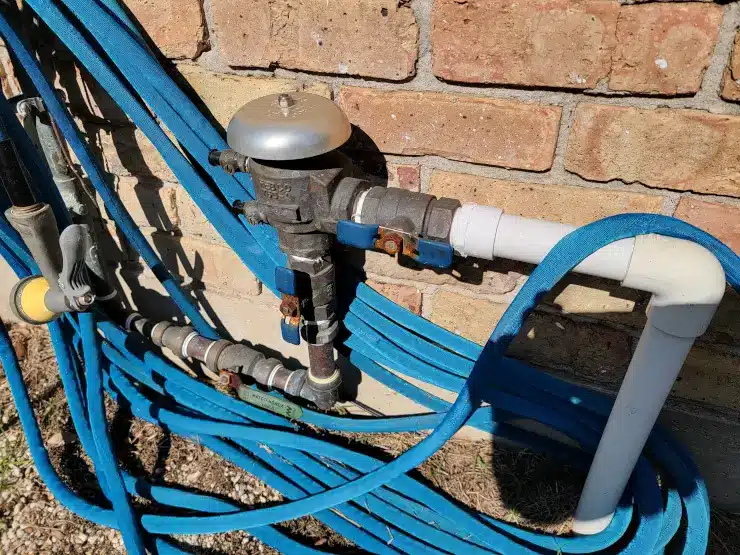
A FEBCO pressure vacuum breaker. For most homes with sprinklers, this is the device the code calls for.
| Device | How it works | Where it goes | Tested yearly? |
|---|---|---|---|
| Air gap | A physical space, no moving parts | Hoses, pool fills, buckets | No |
| Hose bib vacuum breaker | Caps the spigot, stops backsiphonage | Outdoor faucets | No |
| Atmospheric vacuum breaker | Lets air in when pressure drops | Simple irrigation zones | No |
| Pressure vacuum breaker (PVB) | Spring-loaded check plus air inlet | Most home sprinkler systems | Yes |
| Double check valve (DCVA) | Two independent check valves | Moderate-hazard connections | Yes |
| Reduced pressure zone (RPZ) | Two checks plus a relief valve | Wells, boilers, high hazard | Yes |
Not sure which device your property needs, or whether you need one at all? Call National Economy Plumbers at (504) 322-3950 or request a quote and we will take a look.
What a Residential Backflow Preventer Costs
Backflow preventer cost is the question we hear most, and the honest answer is that it depends on the device, which depends on the hazard. The good news for most homeowners is that the common residential backflow preventer, a PVB on a sprinkler line, sits at the affordable end. Here are realistic ranges in the New Orleans market, installed, though final pricing always depends on size, access, and the condition of the existing plumbing. Treat backflow preventer cost here as ballpark, not a quote.
| Device | Typical installed cost | Notes |
|---|---|---|
| Hose bib vacuum breaker | $8 to $15 (part) | A simple do-it-yourself add-on |
| Pressure vacuum breaker (PVB) | $300 to $600 | The usual sprinkler-system device |
| Double check valve (DCVA) | $500 to $1,000 | Moderate-hazard connections |
| Reduced pressure zone (RPZ) | $800 to $2,000 | High hazard, more components |
| Annual certification test | $75 to $150 | Required every year on tested devices |
The piece people forget to budget for is the yearly test. Any device that can be tested has to be, once a year, by a certified tester, and the result has to be filed with the city. We cover that process in depth in our guide to annual backflow certification, but the short version is that the test itself is inexpensive next to the penalty for skipping it. When you weigh residential backflow preventer cost against a fine that starts at $500 per device and climbs from there, staying current is the cheap path by a wide margin.
A residential backflow preventer installation is usually a half-day job for a single device. We shut the water briefly, fit the assembly at the right height with the clearances a tester needs, pressure-check the work, and file the first certification so you begin compliant. Most homeowners never feel a difference at the tap afterward. If a backflow preventer cost estimate comes in above the ranges in the table, it is almost always because the existing plumbing needs rework to bring the connection up to code, and we will walk you through exactly why before any work begins.
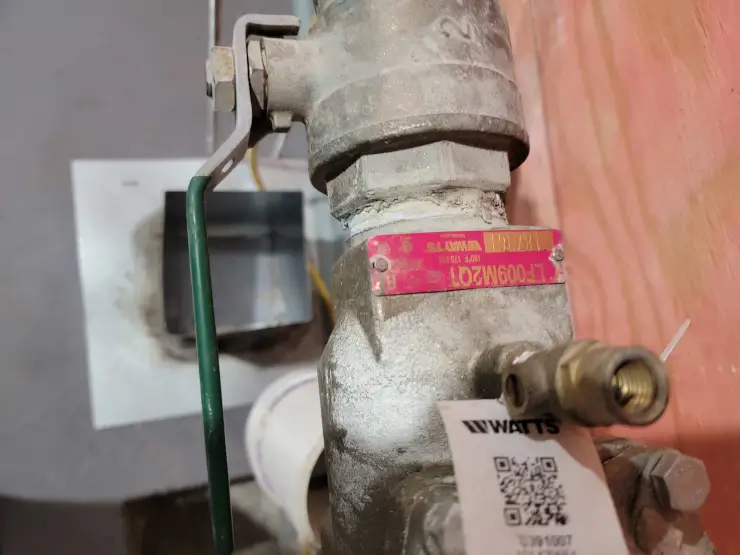
Every tested assembly gets a dated tag. Annual certification is what keeps you compliant with the Sewerage and Water Board.
Got a Letter from the Sewerage and Water Board?
This is how most New Orleans homeowners discover they need residential backflow prevention at all. The Sewerage and Water Board surveys the city, by street canvassing and even satellite imagery, looking for cross-connections like irrigation systems and pools. When they spot one on your property, they mail a notice telling you a residential backflow preventer is required. It is not a scam and it is not optional, but it is also not something to panic over. There is a clear path, and a few choices depending on what you actually want.
| Step | What it means |
|---|---|
| Read the notice | It names the hazard found, usually an irrigation system or pool, and a deadline |
| Confirm it is real | If you have no irrigation or pool, you can request a resurvey rather than install anything |
| Call a certified plumber | Only an SWBNO-approved tester can install and certify the right device |
| Install and test | The device goes in, gets tested, and the result is filed within 10 days |
| Or disconnect | If you no longer use the irrigation system, a plumber can cap the line instead |
That last option is one people miss. If the notice is for an old sprinkler system you never use anymore, you do not have to pay to protect it. A licensed plumber can disconnect it properly, remove the preventer, and cap the line, documenting the work so the city closes out the requirement. Whether the answer is install or disconnect, we can have it tested or installed and handle the paperwork so the notice is resolved cleanly.
One more path worth knowing: if you get a notice but genuinely have no irrigation system, pool, or other hazard, you are not stuck installing a residential backflow preventer you do not need. The city’s surveys sometimes flag a property from satellite imagery that no longer matches what is on the ground. You can ask the Sewerage and Water Board to resurvey your property, and a quick call to their backflow department usually sorts it out. Before you spend a dollar, it is worth confirming the hazard the city flagged is really there.
Why New Orleans Homes Get Flagged So Often
A few things make this more common here than in most cities. New Orleans has a lot of older homes with irrigation systems that owners forgot they even had, installed by a previous owner and running on a timer nobody thinks about. The city’s enforcement has ramped up since late 2024, so those long-ignored systems are now getting surveyed and flagged. And our low elevation and storm-driven pressure swings make backsiphonage a genuine risk rather than a theoretical one, which is the whole reason residential backflow prevention is enforced here.
Storm season is the sharp edge of it. When a main breaks or pressure drops during heavy weather, that is precisely when a cross-connection can pull contaminated water backward, and it is also when an unprotected system is most exposed. A burst line or a sudden water-quality change during a storm is a plumbing emergency worth a fast call. The rest of the year, the smart move is simply to have the right device in place and tested before the season arrives.
We work on residential backflow prevention across the metro, and our New Orleans plumbers are on the city’s approved tester list, which matters because the city will only accept a certification filed by an approved professional. A test done by anyone else does not count, no matter how good the work.
What to Do Next
If you have a sprinkler system, a pool, a well, or a letter from the city, the path forward is straightforward. Have someone qualified look at what is connected, install or service the right residential backflow preventer, and get it tested and filed. If you are still asking do I need a backflow preventer at all, a quick assessment settles it, and very often the answer for a simple home is a free air gap habit rather than any hardware.
National Economy Plumbers has protected New Orleans water since 1939, three generations of master plumbers, with our own licensed crews rather than subcontractors. We are a Louisiana Master Plumber outfit, license LMP 214, and an SWBNO-approved tester, so we can survey, install, test, and file the certification in one relationship. As the local backflow prevention experts, we will tell you straight whether your home needs a residential backflow preventer or just a better habit at the hose.
Got a backflow notice, or just want to know if you need one?
We will assess your property, install or test the right device, and handle the SWBNO paperwork. Serving New Orleans since 1939. Louisiana Master Plumber LMP 214.
Residential Backflow Prevention FAQs
The questions New Orleans homeowners ask us most about backflow preventers, what triggers the requirement, what it costs, and how the testing works. If your situation is not covered here, call us at (504) 322-3950 and we will help you sort it out.
Do I need a backflow preventer on my home in New Orleans?
It depends on what is connected to your water. A plain home with only indoor plumbing and outdoor faucets usually does not need residential backflow prevention. But if you have an in-ground sprinkler system, a pool, a well, or fire sprinklers, you almost certainly do, and the Sewerage and Water Board may flag it during their property surveys.
I got a SWBNO letter about a backflow preventer. What do I do?
The notice means the city found a cross-connection, usually an irrigation system or pool. Read the deadline, then call an SWBNO-approved plumber to install and certify the right device. If you do not actually have the hazard listed, you can request a resurvey instead of installing anything.
How much does a residential backflow preventer cost?
Residential backflow preventer cost depends on the device. For most homes, a pressure vacuum breaker on a sprinkler line runs roughly $300 to $600 installed in the New Orleans market. A double check valve is around $500 to $1,000, and a high-hazard RPZ assembly $800 to $2,000. The yearly certification test is usually $75 to $150, so total backflow preventer cost stays modest.
Do I really need one just for a sprinkler system?
Yes. A backflow preventer for sprinkler system lines is the most common residential requirement there is. Sprinkler heads sit in soil, fertilizer, and standing water, so a drop in pressure can siphon that backward into your drinking water. Louisiana code and SWBNO both require a backflow preventer for sprinkler system protection on irrigation lines.
What is the difference between a PVB and an RPZ?
A pressure vacuum breaker (PVB) protects against backsiphonage and is the standard choice for home irrigation. A reduced pressure zone (RPZ) assembly protects against both backsiphonage and backpressure and is required for high-hazard connections like boilers or wells. The RPZ is more protective, larger, and costs more.
How often does my home backflow preventer have to be tested?
Any testable residential backflow preventer, a PVB, DCVA, or RPZ, must be certified once a year by an approved tester, and the result filed with SWBNO within 10 days. Simple devices like a hose bib vacuum breaker or an air gap do not require testing. Missing the annual test is what triggers most penalties.
Can I install or test it myself?
You can add a hose bib vacuum breaker yourself, that is just a screw-on part. But a PVB, DCVA, or RPZ must be installed and tested by a certified professional for the certification to count. SWBNO will not accept a test filed by an unlicensed person, so doing it yourself leaves you non-compliant.
Will a backflow preventer lower my water pressure?
Slightly, yes. Every backflow device adds a small amount of resistance, and an RPZ drops pressure a little more than a simpler device because of its relief valve. For normal home use the difference is rarely noticeable. If your pressure was already low, mention it so we can size the device and plumbing correctly.
Do I need to protect it from freezing in winter?
Yes. An above-ground device like a PVB can crack in a hard New Orleans freeze, which is why you sometimes see them wrapped or fitted with a freeze cap. Draining or insulating the assembly before a freeze protects it. If yours cracked over winter, it will fail its next test and need repair before recertification.
Request a Quote Now
Serving New Orleans, Metairie, Kenner, Marrero, Chalmette & Terrytown LA
FREE ESTIMATES




national economy plumbers
Full Service Plumbing New Orleans, Louisiana
Backflow Prevention Specialist
National Economy Plumbers
7204 Washington Ave.
New Orleans, LA 70125
(504) 322-3950
or Send Us an Email Here.
© 2012-2026 NationalEconomyPlumber.com
– All rights reserved. –
Information on this website may not be re-used without prior written consent from National Economy Plumbers.

HOURS & LICENSE INFO
Monday-Friday: 24 Hours Daily
Saturday-Sunday: 24 Hours
Louisiana Licensed, Bonded, Insured
Master Plumbers License LA LMP 214
Master Natural Gas Fitters LA LMNGF 8026
Orleans Plumbing #40 / Gas #03LGA11246
Jefferson Plumbing #408 / Gas #761
0 Comments