National Economy’s Plumbing Blog
Plumbing Articles from New Orleans, LA
How to Unclog a Toilet (With or Without a Plunger): A New Orleans Plumber’s Guide

📅 Updated June 25, 2026
Key Takeaways
- You can usually unclog a toilet without a plunger using dish soap and hot (never boiling) water, an enzyme cleaner, a wet/dry vacuum, or a closet auger.
- Hot water loosens a soft clog, but boiling water can crack the bowl, so keep it hot, not boiling.
- Skip caustic chemical drain openers, especially in older New Orleans homes, where they corrode aging cast-iron and clay pipes.
- A toilet that keeps clogging, or one that backs up while other drains gurgle, usually points to a deeper line or sewer problem, not anything you flushed.
- A running or weak-flushing toilet is almost always a worn flapper, a misadjusted fill valve, or mineral buildup in the flush jets.
- Call a licensed New Orleans plumber when multiple fixtures back up, sewage odor appears, water pools at the base, or the same toilet clogs again and again.
- National Economy Plumbers has cleared New Orleans clogs since 1939, with 24-hour service across the metro.
If you need to unclog a toilet without a plunger, the fastest fixes are usually already in your home. To unclog a toilet quickly, squirt a generous amount of dish soap into the bowl, follow it with hot (not boiling) water, let it sit, and most soft clogs clear within 20 to 30 minutes. Baking soda and vinegar, an enzyme cleaner, a wet/dry vacuum, or a closet auger handle the stubborn ones. Below are seven proven methods to unclog a toilet, the mistakes that make a clog worse, and the signs that a clogged toilet is really a deeper plumbing problem.
Most of the time you can unclog a toilet yourself, and knowing how to unclog a toilet at home saves a service call for the simple clogs. The methods below are the same ones we use on a basic clog before we ever reach for a power tool. The trick is matching the method to your clog, knowing when to stop, and spotting when a clogged toilet is a warning about something bigger.
First, Stop: What to Do the Moment Your Toilet Clogs
Before you try to unclog a toilet, resist the urge to flush again. A second flush adds water the bowl cannot move, and that is how a clogged toilet turns into an overflow across your floor. If the water is rising toward the rim, lift the tank lid and push the rubber flapper down by hand to stop more water from entering the bowl.
Next, buy yourself room to work. Lay down old towels, put on rubber gloves, and turn on the bathroom fan. If you want a hard stop on the water, reach behind the base and turn the shut-off valve clockwise. With the panic handled, you can work calmly through the steps to unclog a toilet below.
How to Unclog a Toilet Without a Plunger: 7 Proven Methods
Here is how to unclog a toilet without a plunger using seven methods that work, ordered from gentlest to most hands-on. To unclog a toilet with the least effort, start at the top of the list. The first few handle ordinary soft clogs, and the last few deal with stubborn blockages.
One distinction guides every attempt to unclog a toilet. A soft clog, made of toilet paper and waste, responds to water, heat, soap, and time. A hard clog, caused by a flushed object like a toy or a wad of wipes, will not dissolve, and trying to unclog a toilet with home remedies will not move it. If you know an object went down, skip to the wet/dry vacuum, the auger, or a phone call.
1. Unclog a Toilet With Dish Soap and Hot Water
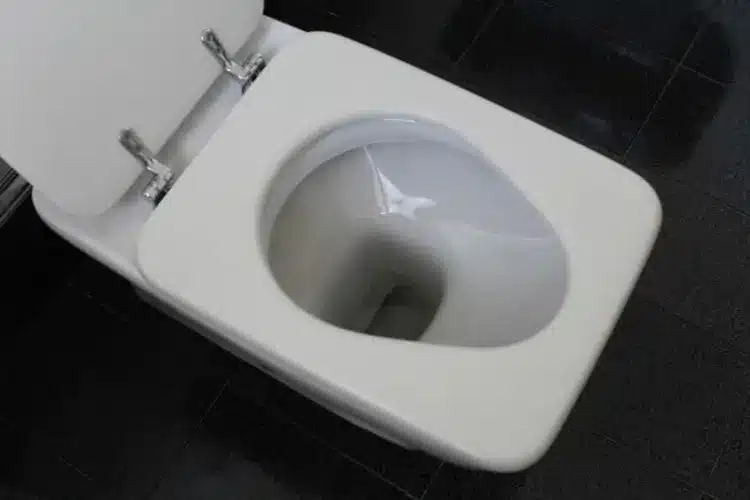
This is the method most plumbers reach for first to unclog a toilet, because it works on the most common clogs and risks nothing. Squirt about a half cup of liquid dish soap into the bowl and let it slide down around the clog for five to ten minutes. The soap coats the trap and adds slip. While it sits, heat water until it is hot to the touch but not boiling, then pour it in from waist height so the weight adds gentle pressure. Wait 20 to 30 minutes, then test with one flush. Shampoo or hand soap works in a pinch.
2. Baking Soda and Vinegar
If soap alone does not move it, a baking soda and vinegar reaction can unclog a toilet by breaking down an organic clog. Pour one cup of baking soda into the bowl, then slowly add about two cups of white vinegar. The mixture fizzes, and that reaction loosens waste and paper. Let it work 20 to 30 minutes, follow with hot water, and test with one flush. This is a mild, pipe-safe way to unclog a toilet, though it will not cut through a foreign object like a toy or a wad of wipes.
3. Unclog a Toilet With an Enzyme Drain Cleaner
Enzyme cleaners are the one store-bought product we are comfortable recommending to unclog a toilet. Unlike caustic chemical openers, they use bacteria and enzymes to digest organic waste, and they are safe for pipes and septic systems. Pour the product in as directed, usually before bed, and let it work overnight. By morning, a soft clog has often broken down enough to flush. Enzymes are slow, so this suits a clogged toilet that can wait, not an emergency. Used monthly, they also keep a drain that clogs often clearer.
4. The Fill-and-Wait Water Weight Method
Sometimes a soft clog just needs time and a little extra weight to unclog a toilet. If the bowl is not near the rim, add hot water until it sits a few inches higher than normal, then walk away for 20 to 30 minutes. The added column of water creates steady downward pressure, and gravity slowly works the blockage loose. This is the safe, hands-clean way to unclog a toilet that people once tried with a squeezed water bottle. It will not clear a true obstruction, but for a partial clog it often works.
5. A Cloth-Wrapped Wire Hook
In a pinch, a straightened wire coat hanger can help you unclog a toilet when the clog sits just past the bowl. The step most guides skip: wrap the working end with a rag or cloth tape first. Bare wire scratches the porcelain glaze, and once that glaze is scored, the bowl stains and clogs more easily for good. Feed the padded end in gently, and when you feel resistance, push and twist to break the clog up. A hanger only reaches the first bend of the trap, so treat it as a stopgap.
6. Unclog a Toilet With a Wet/Dry Shop Vacuum
A wet/dry vacuum is the legitimate, mess-free way to unclog a toilet by pulling the clog out instead of pushing it through, and it can even retrieve a flushed object. A regular household vacuum will not do, so use only a true wet/dry shop vac. First, vacuum the standing water out of the bowl. Then wrap an old towel around the hose end to form a seal, insert it a few inches into the drain, and switch it on. The suction can draw the blockage out. Sanitize the vacuum thoroughly afterward.
7. A Closet Auger (Toilet Auger)
When household methods fail, a closet auger is what a professional uses to unclog a toilet, and it is still a no-plunger fix. Unlike a wire hanger, a closet auger is built for toilets: a flexible cable inside a rubber-sleeved tube that protects the bowl while it reaches through the trap. Insert the tip, crank the handle clockwise, and feed the cable until it meets the clog. Then work it forward and back to break the blockage apart or hook and pull it out. A closet auger clears most clogs a plunger cannot, which makes it the most reliable way to unclog a toilet on this list.
| Method | Best for | Time needed | Risk level |
|---|---|---|---|
| Dish soap and hot water | Everyday soft clogs | 20 to 30 minutes | None |
| Baking soda and vinegar | Organic clogs and paper | 20 to 30 minutes | None |
| Enzyme drain cleaner | Soft clogs that can wait | Overnight | None |
| Fill-and-wait water weight | Sluggish, partial clogs | 20 to 30 minutes | Low |
| Cloth-wrapped wire hook | A clog near the bowl | 5 to 15 minutes | Medium, can scratch |
| Wet/dry shop vacuum | Stubborn clogs, flushed objects | 10 to 20 minutes | Low |
| Closet (toilet) auger | Deep or stubborn clogs | 10 to 20 minutes | Low |
How to Unclog a Toilet With a Plunger, the Right Way
If you do have a plunger, technique matters more than muscle when you unclog a toilet. Use a flange plunger, the kind with a soft rubber extension that folds out from the cup, because a flat sink plunger cannot seal a toilet drain. Run the head under hot water first to soften the rubber for a better seal.
Lower the plunger in at an angle so it fills with water rather than air, and make sure the bowl holds enough water to cover the cup. Press gently on the first push to expel trapped air, then pump firmly while keeping the seal, around 15 to 20 strokes. That pressure is often all it takes to unclog a toilet. If the seal slips, stop and reset it rather than splashing the bowl.
What Not to Do: Mistakes That Make a Clogged Toilet Worse
A few popular fixes cause more harm than the clog itself. Never pour boiling water into the bowl to unclog a toilet. The thermal shock can crack the porcelain, and a cracked bowl costs far more than any clog. Keep the water hot, not boiling.
Skip the caustic chemical drain openers too. They generate heat as they sit, which can craze the porcelain, and they are hard on plumbing. In many older New Orleans homes with cast-iron or clay lines, repeated use to unclog a toilet corrodes pipes already decades into their service life. If a clog will not clear, professional drain cleaning is safer and cheaper than pipe damage.
Never mix cleaning products in the bowl either. Combining bleach with ammonia or certain acids releases toxic gas in a small bathroom. And do not keep flushing to test it. Each failed flush adds water that has nowhere to go, which is exactly how a clogged toilet becomes an overflow.
Why Does My Toilet Keep Clogging?
A one-time clog is normal. A toilet that keeps clogging is a symptom, and clearing it again and again only delays the real fix. The first thing to notice is whether the trouble is one toilet or the whole house. That single clue tells you a great deal about why your toilet keeps clogging.
If only one toilet clogs while every other drain runs fine, the cause is usually local: a partial blockage in the trap, mineral buildup choking the flush, or a first-generation low-flow toilet that never had the power to clear a long branch line. Many historic New Orleans homes were retrofitted with early 1.6-gallon toilets that clog on the same waste an older bowl handled easily, which is a frequent reason a toilet keeps clogging here.
If the toilet backs up while the tub gurgles or other drains run slow, the problem is downstream in the main line or your sewer lateral, and no home method to unclog a toilet fixes that. This is common in our older neighborhoods. Clay and cast-iron laterals corrode, tree roots from our live oaks work into the pipe joints, and the high water table and shifting soils create low spots where waste collects.
One more cause hides on the roof. Every drain system has a vent stack that lets air in so water and waste flow smoothly. When that vent clogs with leaves or a bird nest, you get slow flushes, gurgling, and a bowl that bubbles, which people mistake for a clog in the toilet. It is easy for a plumber to check, and a hidden reason a toilet keeps clogging that no home remedy will solve.
In the older homes around Mid-City and Uptown, we see the same pattern most weeks: a toilet that keeps clogging every few weeks almost always traces back to a root intrusion at a single clay-pipe joint, not anything the homeowner flushed. A sewer camera inspection finds the exact spot, and targeted sewer line repair ends the cycle for good.
| What you notice | Likely cause | DIY or pro |
|---|---|---|
| One toilet clogs, other drains fine | Local trap clog, weak low-flow flush, or jet buildup | Usually DIY |
| The same toilet clogs again and again | Partial line blockage, vent issue, or worn fixture | Pro |
| Toilet backs up when the tub or sink runs | Main line or sewer lateral blockage | Pro |
| Gurgling drains and sewage odor | Root intrusion or failing sewer lateral | Pro |
| Slow drains throughout the house | Main line buildup or a pipe belly | Pro |
Stuck on a toilet that keeps clogging, or seeing more than one drain act up? That is worth a real diagnosis, not another try to unclog a toilet by hand. Call National Economy Plumbers at (504) 322-3950 and we will find out what is going on.
Other Common Toilet Problems and What They Mean
Clogs are not the only trouble a toilet gives you. Several issues are easy to recognize once you know the signs, and catching them early keeps a small fix from turning into water damage. These problems are not something you unclog a toilet to solve, since they call for a different repair.
The Toilet Keeps Running
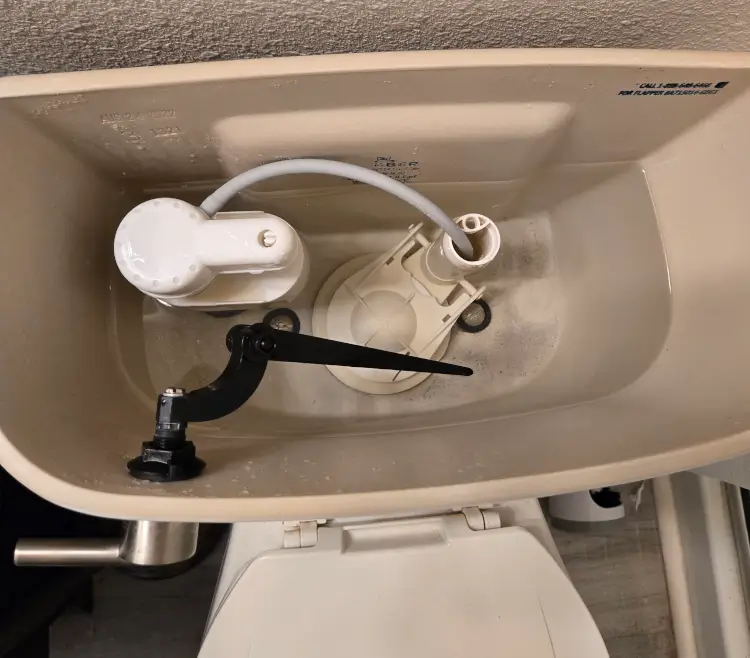
A toilet should be silent between flushes. If you hear water trickling at random, the usual culprit is the flapper, the rubber seal at the bottom of the tank. When it warps or wears, water leaks from the tank into the bowl, and the fill valve keeps topping it off. A quick dye test confirms it: add a few drops of food coloring to the tank, wait without flushing, and if color appears in the bowl, the flapper is leaking. A running toilet can waste up to 200 gallons a day, according to the EPA, so it is worth a fast fix.
If the flapper looks fine, check the chain and the fill valve. A chain that is too long or too short stops the flapper from sealing, and a fill valve set too high sends water down the overflow tube continuously. Both are inexpensive parts and a common weekend repair.
Weak or Partial Flushing
When a flush feels gutless, the cause is often mineral buildup. Hard water deposits clog the rim jets and the siphon jet that drive water into the bowl, weakening the flush over time. A low tank water level or a flapper that closes too soon does the same. Clearing the jets and adjusting the level usually restores a strong flush. A chronically weak flush is also a leading reason a toilet keeps clogging, since it cannot move waste fully through the trap.
Leaks and Standing Water
Water on the floor around the base is a different problem than a clogged toilet. It often means the wax ring under the toilet has failed, which lets water escape each time you flush. That repair calls for pulling and resetting the toilet, so it is a job for a plumber. Leaks can also come from the supply line, the tank bolts, or the tank-to-bowl gasket, which are easier to tighten or replace.
A Sweating Tank
In our humid New Orleans summers, a tank can drip with condensation when cold water inside meets warm, moist bathroom air. This sweating is not a leak, though it can fool you into thinking one. An insulating tank liner, or simply running the bathroom fan, usually solves it.
When to Call a New Orleans Plumber
Most clogs clear with the methods above. A few situations, though, mean it is time to stop trying to unclog a toilet yourself and call a licensed plumber before you make things worse or miss a real problem.
| Situation | What to do |
|---|---|
| First-time clog from paper or waste | Try the no-plunger methods above |
| A flushed toy or object you cannot reach | Stop flushing and call a plumber |
| The same toilet keeps clogging | Call for a diagnosis |
| Multiple drains gurgle or back up | Call right away, likely the sewer line |
| Sewage odor or water at the base | Call a plumber promptly |
| You cannot stop the bowl from rising | Shut the valve, then call |
If you are dealing with any of these, professional plumbing help in New Orleans costs far less than a cracked bowl, a flooded floor, or a sewer backup left to grow. Clogged toilet repair is routine work for a licensed crew, and a proper diagnosis ends the guesswork. We handle clogged toilet repair, recurring clogs, and the sewer issues behind them every day, and we step in when you cannot unclog a toilet on your own.
How to Prevent Toilet Clogs
The cheapest way to unclog a toilet is to never let it clog. The single biggest rule is simple: flush only human waste and toilet paper. Everything else belongs in the trash.
That includes the so-called flushable wipes, the most common avoidable cause of clogs we see. They do not break down like toilet paper, and they snag on roots and pipe bellies downstream. Paper towels, cotton swabs, dental floss, feminine products, and grease cause the same trouble. Keep a small lidded trash can next to the toilet, and make sure everyone in the house knows the rule, so you rarely have to unclog a toilet at all.
A few habits help too. Avoid the in-tank drop-in bleach tablets, which degrade the flapper and lead to a running toilet. Keep loose items off the tank lid where they can fall in. Fix a weak flush early. And in an older home with a clogged toilet more than once, periodic drain cleaning keeps the lines clear before a backup starts.
Trusted Toilet and Drain Help in New Orleans Since 1939
Knowing how to unclog a toilet without a plunger handles the everyday clog, and most of the time these methods to unclog a toilet are all you will need. When a clogged toilet keeps coming back, when more than one drain acts up, or when you would rather hand it off, that is what we are here for.
National Economy Plumbers has served New Orleans homes since 1939. We are a licensed, bonded, and insured master plumber, Louisiana license LA LMP 214, with 24-hour service across New Orleans, Metairie, Kenner, Marrero, Chalmette, and Terrytown. From a stubborn clogged toilet to full sewer line repair and clogged toilet repair, we find the real cause and fix it right the first time.
Clogged toilet that will not quit?
Get free estimates and fast, friendly service from a licensed New Orleans plumber.
FAQs About Unclogging a Toilet
Quick answers to the questions New Orleans homeowners ask us most about how to unclog a toilet, what is safe to try, and when a clogged toilet is really a sign of something bigger.
Will dish soap and hot water really unclog a toilet?
Yes, dish soap and hot water unclog a toilet in most soft-clog cases. The soap lubricates the trap while the hot water softens paper and waste, letting the blockage slip through. Add about a half cup of soap, follow with hot but not boiling water, and wait 20 to 30 minutes before flushing once to test.
Can I pour boiling water into the toilet to unclog it?
No, never use boiling water to unclog a toilet. The sudden heat can crack the porcelain bowl, turning a simple clog into a costly replacement. Use water that is hot to the touch but not boiling. It still softens a soft clog without the risk of thermal shock to the bowl or the wax seal beneath it.
Does baking soda and vinegar actually work on a clogged toilet?
Baking soda and vinegar can clear a mild, organic clogged toilet. The fizzing reaction helps break down paper and waste when you add one cup of baking soda and two cups of vinegar, wait 20 to 30 minutes, then pour in hot water. It will not dissolve a toy, wipes, or other solid objects, which need a tool instead.
Are chemical drain cleaners safe to use in a toilet?
Enzyme cleaners are safe, but caustic chemical drain openers are not, especially in older homes. The harsh chemicals can craze the porcelain and corrode the aging cast-iron or clay pipes common in New Orleans. Choose an overnight enzyme product for a soft clog, or call a plumber for anything stubborn.
Why does my toilet keep clogging even after I clear it?
A toilet that keeps clogging usually points to more than what you flushed. The cause may be a weak low-flow flush, mineral buildup in the jets, or a deeper issue like a partial main-line blockage or tree roots in an older sewer lateral. A camera inspection finds the real cause so the fix actually lasts.
Will a clogged toilet eventually unclog itself?
Sometimes a soft clog breaks down on its own as water and time work on it, often overnight. A clog caused by a foreign object will not clear itself and tends to worsen with each flush. If the bowl is full, avoid flushing again, and try a no-plunger method or call a plumber rather than waiting.
When should I call a plumber instead of trying to unclog a toilet myself?
Call a plumber when the same toilet keeps clogging, when multiple drains gurgle or back up, when you smell sewage, or when water pools around the base. These point to a sewer line or seal problem that DIY methods cannot fix. A flushed object you cannot reach is also a job best left to a pro.
Request a Quote Now
Serving New Orleans, Metairie, Kenner, Marrero, Chalmette & Terrytown LA
FREE ESTIMATES


national economy plumbers
Full Service Plumbing New Orleans, Louisiana
Backflow Prevention Specialist
National Economy Plumbers
7204 Washington Ave.
New Orleans, LA 70125
(504) 322-3950
or Send Us an Email Here.
© 2012-2026 NationalEconomyPlumber.com
– All rights reserved. –
Information on this website may not be re-used without prior written consent from National Economy Plumbers.
HOURS & LICENSE INFO
Monday-Friday: 24 Hours Daily
Saturday-Sunday: 24 Hours
Louisiana Licensed, Bonded, Insured
Master Plumbers License LA LMP 214
Master Natural Gas Fitters LA LMNGF 8026
Orleans Plumbing #40 / Gas #03LGA11246
Jefferson Plumbing #408 / Gas #761