
National Economy’s Plumbing Blog
Plumbing Articles from New Orleans, LA
Leaky Pipe Signs: How to Find a Water Leak in Your New Orleans Home
📅 Updated June 27, 2026
Key Takeaways
- The clearest leaky pipe signs are a jump in your water bill, a musty smell, stains on walls or ceilings, the sound of running water, and a sudden drop in pressure.
- The fastest home test for a hidden water leak: shut off every fixture, then watch the water meter. If it keeps moving, water is escaping somewhere.
- Low water pressure across the whole house, with nothing else changed, can mean a leak is bleeding pressure out of the line before it reaches your taps.
- Most under-sink and fixture leaks you can spot yourself. A leak behind a wall, under a slab, or out in the yard needs professional water leak detection.
- In older New Orleans homes, a high water table and aging cast iron or copper-in-slab lines hide leaks longer and make early detection matter more.
- Caught early, a leaky pipe is a small repair. Left alone, it becomes rot, mold, and a foundation problem. When in doubt, get it looked at.
A leaky pipe rarely announces itself, which is exactly what makes it dangerous. By the time you see a stain or hear a drip, water has often been moving where it should not for weeks.
The short version: the most reliable signs of a water leak are an unexplained jump in your water bill, a musty smell, stains on walls or ceilings, the sound of running water with everything shut off, and a sudden drop in water pressure. The fastest way to confirm one is the water meter test, and if the leak is behind a wall, under your slab, or out in the yard, that is where professional water leak detection comes in.
This guide covers all of it, in the order a New Orleans plumber would actually work through it: how to read the signs, where leaks hide, what low water pressure is really telling you, how to find a hidden water leak, and what to do once you have one. We have run and repaired these lines since 1939, so we will also be straight about the things that are specific to New Orleans homes, because a leaky pipe behaves differently here than it does almost anywhere else.
The 7 Signs of a Water Leak in Your Home
Most leaks give you warning if you know what you are looking at. Here are the seven signs of a water leak we see most often, from the obvious to the easy-to-miss. Any one of them is worth a closer look. Two or more together, and you almost certainly have a leaky pipe somewhere.
1. A water bill that climbed for no reason. If your usage habits did not change but the bill did, water is going somewhere. The numbers are sobering: the EPA estimates household leaks waste nearly a trillion gallons a year nationwide, and the average leaking home loses around 10,000 gallons a year. A hidden water leak shows up on the bill long before it shows up on the wall.
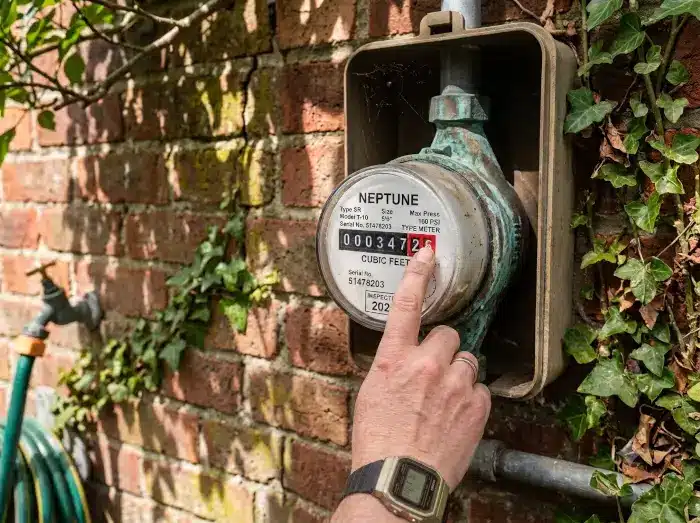
2. The water meter keeps moving. This is the single best home test, and we walk through it in detail below. With every faucet and appliance off, the meter should sit still. If it creeps, you have a leak.
3. A musty smell that will not go away. A leaky pipe inside a wall or under a cabinet feeds mold and mildew, and that damp, earthy smell is often the first clue before anything is visible. In a humid city like ours it gets dismissed as “just the weather,” which is exactly why these leaks run so long.
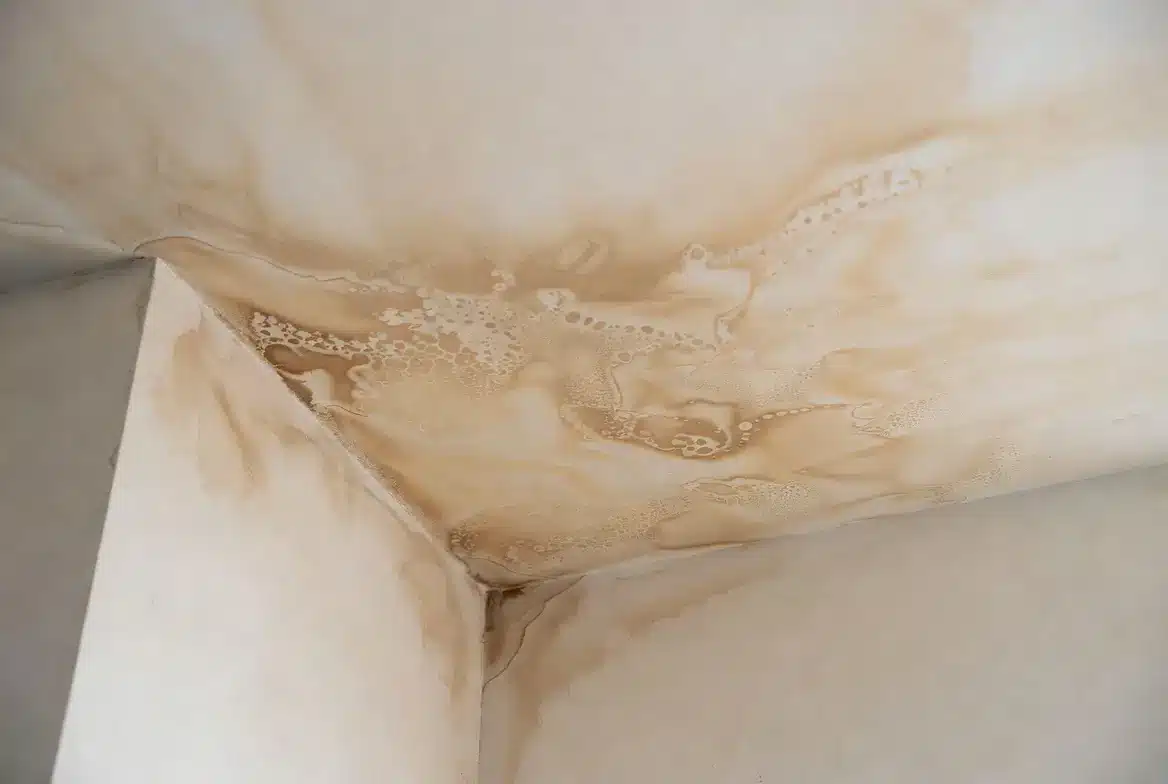
4. Stains, bubbling, or sagging on walls and ceilings. Brown or yellow rings, paint that blisters, drywall that feels soft, a ceiling that bows. These are advanced signs of a water leak, meaning water has been pooling behind the surface for a while. A stain that grows over days is a live leak, not an old one.
5. A drop in water pressure. When a pipe leaks, some of the flow escapes before it reaches your fixtures, so the pressure at the tap falls. Low water pressure has other causes too, which is why it gets its own section below, but a hidden water leak is one of them and the one you least want to ignore.
6. The sound of running water with everything off. Stand still in a quiet house with no water running and listen. A faint hiss or trickle inside a wall or under the floor is the sound of a leaky pipe, and it points you toward the area to check.
7. Warm spots, foundation cracks, or a too-green patch of lawn. A hot-water slab leak can warm a spot on the floor. A line leaking under or beside the foundation can crack it. And a leak in the yard line often shows as one stretch of grass that is greener and growing faster than the rest. A leaky pipe also strains your water heater, so a unit that runs constantly can be a clue. If yours is doing that, it may be a water heater leak rather than the heater itself failing.
| Sign | What it usually means | How urgent |
|---|---|---|
| Water bill spiked | Water escaping somewhere, often hidden | Investigate this week |
| Meter moves with all off | Confirmed active leak | Find the source now |
| Musty smell | Mold from a slow hidden leak | Soon, it is a health issue too |
| Stains or sagging | Water pooling behind the surface | Soon, damage is advancing |
| Low water pressure | Possible leak bleeding the line | Test the meter to confirm |
| Running-water sound | Active leak inside wall or floor | Locate the area now |
| Warm floor or green lawn patch | Slab or buried yard-line leak | Call a pro, hard to reach |
Where Leaks Hide, and How to Check Each One
A leaky pipe can start almost anywhere water travels, but a handful of spots account for most of what we find. Knowing where to look turns a vague worry into a quick check. Start with the places you can see, then work toward the ones you cannot.
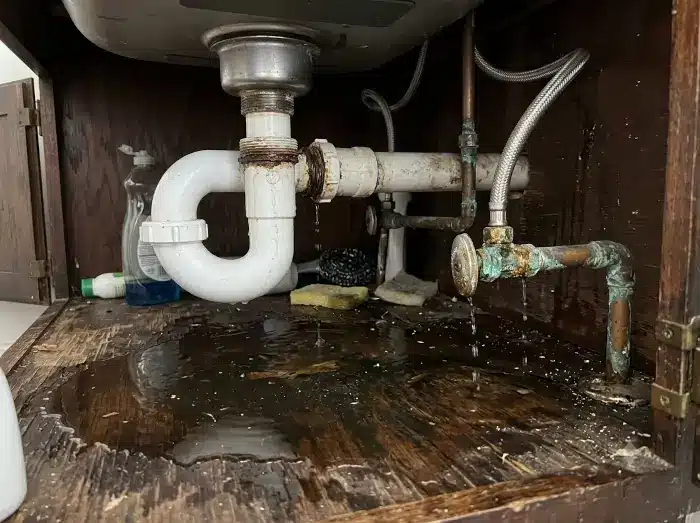
Under the sink is the most common and the easiest to catch. Open the cabinet and feel the drain trap, the supply lines, and the shutoff valves for moisture. A slow drip there stains the cabinet floor and breeds the musty smell from above. Faucets and fixtures are next: a worn washer or cartridge drips at the spout or the base, and those fixture and faucet leaks are the easy-to-spot kind. Toilets hide silent leaks. Put a few drops of food coloring in the tank, wait ten minutes, and if color reaches the bowl without flushing, the flapper is leaking.
The harder cases are out of sight. A leaky pipe inside a wall shows only as a stain or soft spot. A slab leak runs under the concrete foundation, invisible until it warms the floor or cracks it. The water heater can leak at its connections or from a failing tank. And the main line from the street to the house can leak underground, surfacing only as a wet or unusually green strip in the yard. Those last few are where a homeowner’s eyes run out and professional water leak detection takes over.
| Location | Common cause | Quick DIY check |
|---|---|---|
| Under the sink | Loose trap, worn supply line, bad shutoff | Feel fittings for moisture, look for cabinet stains |
| Faucet or fixture | Worn washer or cartridge | Watch the spout and base for drips |
| Toilet | Worn flapper, silent tank leak | Food-coloring test in the tank |
| Behind a wall | Corroded or cracked pipe | Look for stains, soft drywall, musty smell |
| Under the slab | Aging copper, soil movement | Warm floor spots, unexplained meter movement |
| Water heater | Loose connections, failing tank | Check the base and fittings for pooling |
| Yard or main line | Root intrusion, old buried pipe | Look for a wet or extra-green strip of lawn |
Is Low Water Pressure a Sign of a Leak?
Sometimes, yes. Low water pressure is one of the trickier signs of a water leak because it has so many possible causes, and a leak is only one of them. Before you assume the worst, it helps to know what normal looks like. Most homes run between 40 and 80 psi, with around 50 being comfortable. A reading that has quietly fallen below that band, with nothing else changed in the house, is the kind that deserves a second look.
Run through the simple causes first. A partly closed main shutoff or meter valve, a clogged faucet aerator, or a failing pressure regulator can all drop your pressure without a single leak involved. If only one fixture is weak, the problem is almost always that fixture or its supply line. If the whole house is weak, the cause is bigger: corroded pipes narrowing from the inside, a municipal supply issue, or a leak somewhere in the system. When low water pressure shows up alongside a higher bill or a damp smell, treat the leak explanation as the front-runner.
There is one more reason a sudden pressure drop matters, and it is specific to your home’s safety. When supply pressure falls far enough, water can actually reverse direction and siphon backward into your clean lines, a problem called back-siphonage. That is the exact scenario backflow prevention is designed to stop, and it is worth understanding how backflow happens if your pressure has been unstable. For most homeowners it is a non-issue, but a chronic pressure problem is a reason to have the whole system looked at, not just the symptom.
The cleanest way to settle whether a leak is behind it is the water meter test. Shut off every faucet, appliance, and ice maker in the house. Find your water meter, usually in a box near the street or the front edge of the yard, and read it. Wait two hours with no water used, then read it again. If the number moved at all, water is escaping somewhere, and you have confirmed a hidden water leak without opening a single wall.
Bill creeping up, or pressure not what it used to be? Do not wait for the stain to show. Call National Economy Plumbers at (504) 322-3950 or request a quote and we will find it.
How to Find a Water Leak: DIY Checks vs Professional Detection
Finding a leaky pipe is a process of narrowing down. The meter test tells you a leak exists. The next step is figuring out where, and how far you can get on your own depends on whether the leak is in the open or hidden. The visible stuff, under sinks, at fixtures, in the toilet, you can usually trace and even fix yourself. Anything behind a wall, under the slab, or underground is where guessing gets expensive, because the wrong cut into drywall or concrete costs far more than a professional locate.
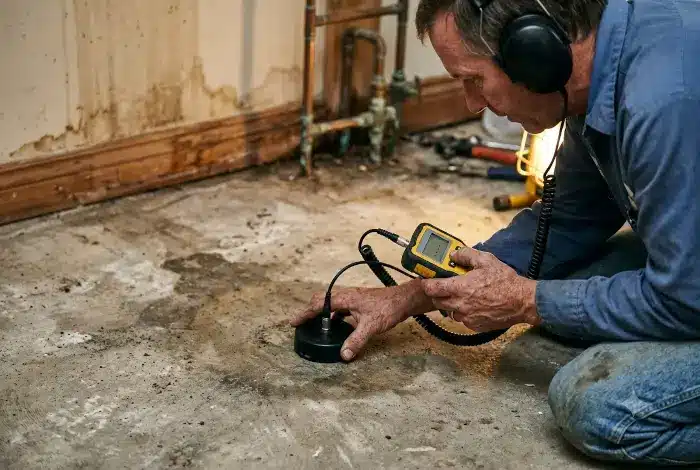
That is where professional water leak detection earns its keep. A trained plumber does not break things open hoping to get lucky. We use acoustic listening equipment that amplifies the sound of water escaping under pressure, pinpointing it through concrete and tile. Thermal cameras read the temperature difference where water saturates a surface. Pressure testing isolates which line is losing water, and a sewer camera inspection sends a video probe into the line to find a break from the inside. The goal is always the same: locate the leak precisely so the repair is a small, targeted opening instead of a demolition.
| Method | What it does | Best for |
|---|---|---|
| Meter test | Confirms a leak exists and its rough rate | First step, any suspected leak |
| Acoustic listening | Amplifies the sound of escaping water | Slab and behind-wall leaks |
| Thermal imaging | Reads temperature change from wet areas | Hot-water lines, hidden moisture |
| Pressure testing | Isolates which line is losing pressure | Narrowing a whole-house leak |
| Camera inspection | Sends video into the pipe | Drain, sewer, and yard-line breaks |
Why New Orleans Homes Are Especially Hard on Pipes
Here is the part the national leak articles never cover, and it is the reason a leaky pipe in New Orleans deserves its own playbook. Our housing stock and our ground are both unusual. A lot of post-war homes in Lakeview, Gentilly, and New Orleans East sit on concrete slabs with copper lines run right through them, while the historic raised houses Uptown and in the Marigny sit on piers over a crawlspace.
The same leak shows up completely differently in each. In a slab home we often hear it at the water heater connection before it ever reaches the floor surface. In a raised home it shows first as a warped floorboard or a damp smell drifting up from below.
It helps to know what is actually in your walls, too. Many older New Orleans homes still carry galvanized steel lines that rust shut and weep from the inside, copper that corrodes and pinholes in our damp ground, and cast iron drains that crack at the hub. Knowing which you have tells a plumber where a leaky pipe is most likely to show up next.
Then there is the ground itself. New Orleans sits on soft, settling soil with a high water table, and that works against you twice. The shifting soil stresses pipe joints until they crack, and the constant subsurface moisture masks a leak that would be obvious on drier ground, so a hidden water leak can run for months here before anyone notices.
If your water bill jumped and the Sewerage and Water Board cannot explain it, a leak on your side of the meter is the usual answer, and many homeowners qualify for a bill adjustment once a plumber documents and repairs it. That is also why early water leak detection is worth more here than almost anywhere, because the ground hides the evidence that would tip you off elsewhere.
This is also why the fix sometimes goes beyond a single coupling. A line that keeps failing along its length is often better rerouted or replaced than patched leak by leak, and a buried main or sewer break may call for sewer line repair rather than a spot fix. For homes across the metro, our New Orleans plumbers work on the actual line, not just the wet spot you can see.
What to Do When You Find a Leak
If you have confirmed a leak, a few steps protect your home while you line up the repair. First, if water is actively running or flooding, shut off the main water valve, usually where the supply enters the house or near the meter. That stops the damage immediately. A burst or gushing pipe is a plumbing emergency, so make the call right away rather than waiting it out.
For a slower leaky pipe, document everything before you touch it. Photograph the source, the staining, and the water meter reading. Those photos help a plumber diagnose faster and support an insurance claim or a utility bill adjustment later. Most policies cover sudden water damage but not gradual neglect, so the record of when you found it and how fast you acted matters. Then call a licensed plumber to find and repair the line properly, with water leak detection first so the opening is small and the fix is permanent.
The thing to remember is that leaks only get more expensive with time. A leaky pipe caught at the stain stage is a quick repair. The same leak ignored becomes rotted subfloor, mold remediation, and eventually foundation work. Acting early is almost always the cheapest path, even when it does not feel urgent yet.
How to Prevent Leaky Pipes
You cannot stop every leak, but you can stack the odds. Keep your water pressure in the healthy 40 to 80 psi range, since pressure running too high is a quiet killer of joints and fittings, and add a pressure regulator if yours sits above that band. Watch your water bill month to month, because a slow climb is the earliest warning a leaky pipe gives.
Replace old rubber supply lines under sinks and toilets with braided steel ones before they fail. If your home still has original galvanized or aging copper, budget for eventual repiping rather than chasing one pinhole leak after another. A yearly look from a plumber, with professional water leak detection if anything seems off, catches the small stuff before it floods anything.
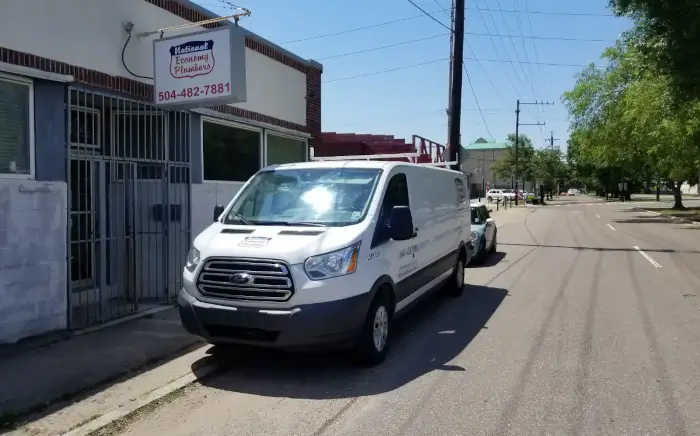
National Economy Plumbers has worked New Orleans pipes since 1939, three generations and counting, with our own licensed crews rather than subcontractors. We are a Louisiana Master Plumber outfit, license LMP 214, and we know how leaks behave in these specific homes and this specific ground. From the first meter test to the final repair, you get a team that has seen your kind of leaky pipe many times before.
Think you have a hidden leak?
We will pinpoint it with proper water leak detection and fix it right, with as little cutting as possible. Serving New Orleans since 1939. Louisiana Master Plumber LMP 214.
FAQs About Water Leaks
A few quick answers to what New Orleans homeowners ask us most about finding a leaky pipe and dealing with a hidden water leak. If your situation is not covered here, call us at (504) 322-3950 and we will help you figure out the next step.
What are the most common signs of a water leak?
The most common signs of a water leak are an unexplained jump in your water bill, a musty smell, stains or sagging on walls and ceilings, the sound of running water with everything shut off, and a sudden drop in water pressure. Any one of these is worth checking. Two or more together usually means a leaky pipe.
How do I find a hidden water leak myself?
Use the water meter test. Shut off every faucet and appliance, read the meter, wait two hours without using water, then read it again. If the number moved, you have a hidden water leak. The meter test confirms a leak exists, though pinpointing one behind a wall or slab usually needs professional water leak detection.
Can a leaky pipe cause low water pressure?
Yes. When a pipe leaks, some of the flow escapes before it reaches your fixtures, so pressure at the tap drops. Low water pressure has other causes too, like a closed valve or a bad regulator, but if it appears along with a high bill or a damp smell, a leak is the likely culprit and worth confirming with a meter test.
How do plumbers find a leak without tearing up my house?
Professional water leak detection uses non-invasive tools. Acoustic equipment listens for water escaping under pressure, thermal cameras read wet areas by temperature, and pressure testing isolates the leaking line. These let us pinpoint a hidden leak through concrete or drywall so the repair is a small, targeted opening instead of demolition.
Why do New Orleans homes get so many leaks?
The soft, settling soil and high water table stress pipe joints until they crack, and the constant ground moisture hides a leak longer than it would elsewhere. Add aging cast iron and galvanized lines in older homes, plus copper run through slabs, and a leaky pipe here often runs undetected far longer than in other regions.
Is a slow leak really worth fixing right away?
Yes. A leaky pipe caught early is a small, cheap repair. Left alone, the same leak rots subfloor, grows mold, spikes your bill, and can undermine a foundation. Acting at the first sign is almost always the least expensive path, even when the leak seems minor and not yet urgent.
Request a Quote Now
Serving New Orleans, Metairie, Kenner, Marrero, Chalmette & Terrytown LA
FREE ESTIMATES




national economy plumbers
Full Service Plumbing New Orleans, Louisiana
Backflow Prevention Specialist
National Economy Plumbers
7204 Washington Ave.
New Orleans, LA 70125
(504) 322-3950
or Send Us an Email Here.
© 2012-2026 NationalEconomyPlumber.com
– All rights reserved. –
Information on this website may not be re-used without prior written consent from National Economy Plumbers.

HOURS & LICENSE INFO
Monday-Friday: 24 Hours Daily
Saturday-Sunday: 24 Hours
Louisiana Licensed, Bonded, Insured
Master Plumbers License LA LMP 214
Master Natural Gas Fitters LA LMNGF 8026
Orleans Plumbing #40 / Gas #03LGA11246
Jefferson Plumbing #408 / Gas #761